

 See My Latest Article on HelloNation

Pregnancy can bring back pain, pelvic discomfort, hip soreness, and changes in posture. For some people, a chiropractic adjustment may be a reasonable part of managing musculoskeletal discomfort during pregnancy—but it is not automatically appropriate for every pregnancy or every technique.
The safest answer is: an adjustment may be safe during an uncomplicated pregnancy when the treatment is modified for pregnancy, the provider understands prenatal care, and the patient’s obstetric clinician is aware of the plan. Research has not established that every form of spinal manipulation is safe in every pregnancy, so individual screening matters.
Is it generally safe to receive an adjustment while pregnant?
For many people with a healthy, uncomplicated pregnancy, gentle, pregnancy-adapted manual care appears to have a low rate of reported serious complications. However, rigorous safety research is limited, and studies do not provide enough evidence to guarantee that manipulation is risk-free. The National Center for Complementary and Integrative Health states that serious adverse events during pregnancy are very rare in reports, but also emphasizes that more research is needed. ([nccih.nih.gov](https://www.nccih.nih.gov/health/spinal-manipulation-what-you-need-to-know?utm_source=openai))
A prenatal visit should begin with a review of:
- How far along the pregnancy is
- Current symptoms and their severity
- Pregnancy complications or high-risk factors
- Prior surgeries, injuries, or bone conditions
- Medications and other treatments
- Any instructions from an obstetric clinician or midwife
The adjustment should be adapted to the pregnancy rather than treated as a routine visit for a nonpregnant patient.
What changes during a pregnancy-focused visit?
Pregnancy changes the spine, pelvis, joints, ligaments, balance, and tolerance for certain positions. As the abdomen grows, lying flat on the stomach may become uncomfortable or impractical. Some people also become more sensitive to pressure because pregnancy hormones affect ligament laxity and joint stability.
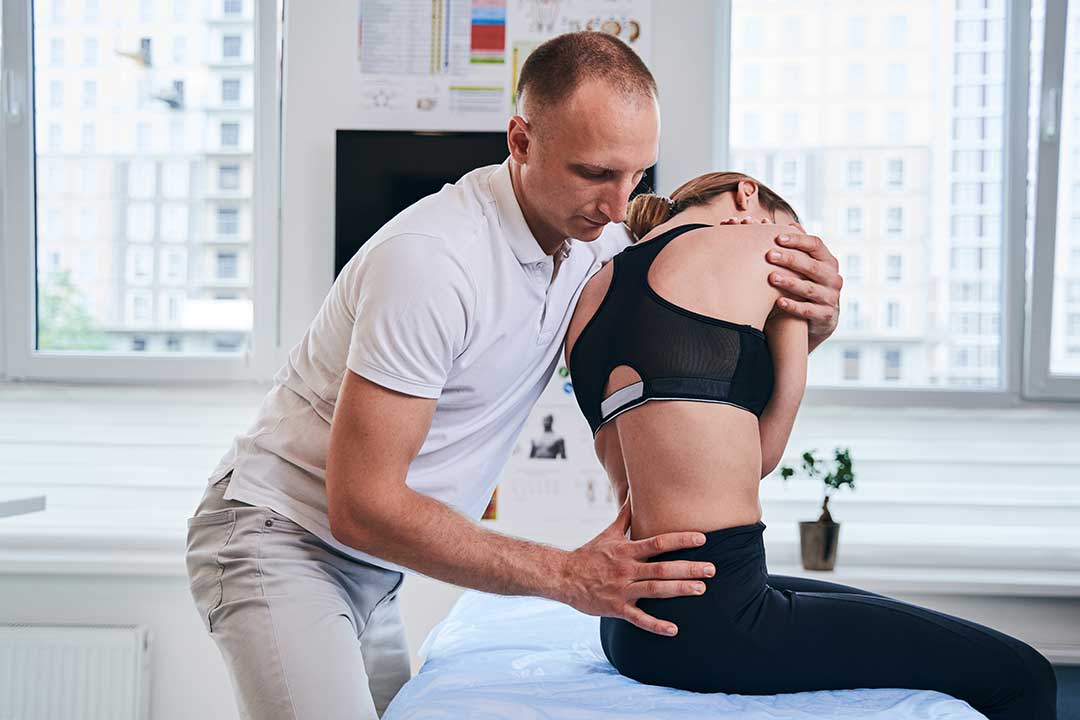
A pregnancy-adapted session may involve:
- Side-lying or supported positions
- Cushions or a table designed to reduce abdominal pressure
- Lower-force mobilization rather than forceful thrusts
- Careful attention to the pelvis, hips, mid-back, and low back
- Avoidance of positions that cause dizziness, shortness of breath, pain, or abdominal pressure
A patient should be able to stop the treatment at any point. Increased pain, unusual symptoms, or discomfort during positioning should be communicated immediately.
Can an adjustment help pregnancy-related back or pelvic pain?
It may help some people manage mechanical low-back pain, pelvic girdle discomfort, or joint stiffness. The potential benefit is generally symptom relief and improved movement—not treatment of the pregnancy itself.
Evidence for chiropractic care and other manual therapies during pregnancy remains limited and varies by technique. A systematic review found mostly low-quality evidence, with few well-designed trials and inconsistent reporting of adverse events. Minor, temporary soreness or symptom changes have been reported, while serious events appear uncommon but cannot be ruled out. ([pmc.ncbi.nlm.nih.gov](https://pmc.ncbi.nlm.nih.gov/articles/PMC8128327/?utm_source=openai))
An adjustment should not be presented as a way to:
- Turn a breech baby
- Prevent miscarriage
- Shorten labor
- Prevent a cesarean birth
- Treat high blood pressure or preeclampsia
- Replace prenatal medical care
Claims about changing fetal position or guaranteeing an easier delivery are not supported strongly enough to treat them as established outcomes.
When should someone avoid an adjustment or obtain medical clearance first?
Pregnancy-related pain is not always a joint or muscle problem. Medical evaluation is more urgent when pain is sudden, severe, unusual, or accompanied by other symptoms.
Extra caution or medical clearance may be appropriate with:
- Vaginal bleeding or leaking fluid
- Regular contractions or signs of preterm labor
- Severe abdominal or pelvic pain
- Placental complications
- Significant high blood pressure or preeclampsia
- A high-risk pregnancy
- Recent trauma or a fall
- Fracture, severe osteoporosis, or major bone weakness
- Progressive numbness, weakness, or loss of coordination
- Fever, unexplained illness, or severe headache
- A history of blood-clotting problems or other serious medical conditions
Emergency symptoms—such as heavy bleeding, severe shortness of breath, chest pain, fainting, new one-sided weakness, or severe headache with vision changes—should be addressed through urgent medical care rather than a manual therapy visit.
Does the trimester affect positioning and technique?
Yes. The appropriate position and amount of pressure may change as pregnancy progresses. Early pregnancy may involve fewer positioning restrictions, but nausea, fatigue, or dizziness can still affect tolerance. Later in pregnancy, the enlarging abdomen and altered balance usually require more support and more careful positioning.
Long periods lying flat on the back may make some pregnant people feel lightheaded or nauseated. The American College of Obstetricians and Gynecologists also advises avoiding prolonged flat-on-the-back positioning during exercise because it can affect comfort and blood flow; similar comfort considerations may apply during hands-on care. ([acog.org](https://www.acog.org/womens-health/faqs/exercise-during-pregnancy?utm_source=openai))
There is no universal week of pregnancy at which all adjustments become unsafe. The decision depends on symptoms, pregnancy status, positioning, technique, and the person’s medical history.
What should a pregnant patient ask before treatment?
Practical questions can help identify whether the visit is appropriately adapted:
- Have you treated pregnant patients at this stage of pregnancy?
- What positions and techniques would be used?
- Will abdominal pressure and prolonged flat-back positioning be avoided?
- How will pregnancy complications affect the plan?
- What symptoms would mean treatment should stop?
- Will the obstetric clinician’s recommendations be considered?
A provider should be willing to explain the intended technique, possible benefits, known limitations, and alternatives without promising a particular birth outcome.
Are there safer alternatives for pregnancy-related discomfort?
Depending on the cause of pain, options may include activity modification, pregnancy-specific strengthening, walking, physical therapy, supportive pillows, heat used cautiously, or other measures approved by the prenatal care team. ACOG notes that appropriate physical activity during an uncomplicated pregnancy can reduce back pain, although activities and positions may need modification. ([acog.org](https://www.acog.org/womens-health/faqs/exercise-during-pregnancy?utm_source=openai))
In Gilbert, hot weather can make dehydration and fatigue more noticeable during outdoor walking or exercise. Hydration, indoor activity during the hottest part of the day, and attention to dizziness or overheating can be practical considerations for local households. These measures do not replace evaluation when pain is severe or unusual.
What is the bottom line?
A pregnancy-adapted chiropractic adjustment may be reasonable for some people, particularly for uncomplicated musculoskeletal pain, but it should not be treated as automatically safe or necessary. The evidence suggests serious complications are uncommon, while also showing that pregnancy-specific safety research is limited. ([nccih.nih.gov](https://www.nccih.nih.gov/health/spinal-manipulation-what-you-need-to-know?utm_source=openai))
The most appropriate plan depends on the pregnancy, the symptoms, the technique, and communication among the patient and prenatal care team. Any new, severe, or concerning symptom should be medically evaluated before considering manual treatment.